AI Uncovers 100+ Hidden Planets in NASA Data
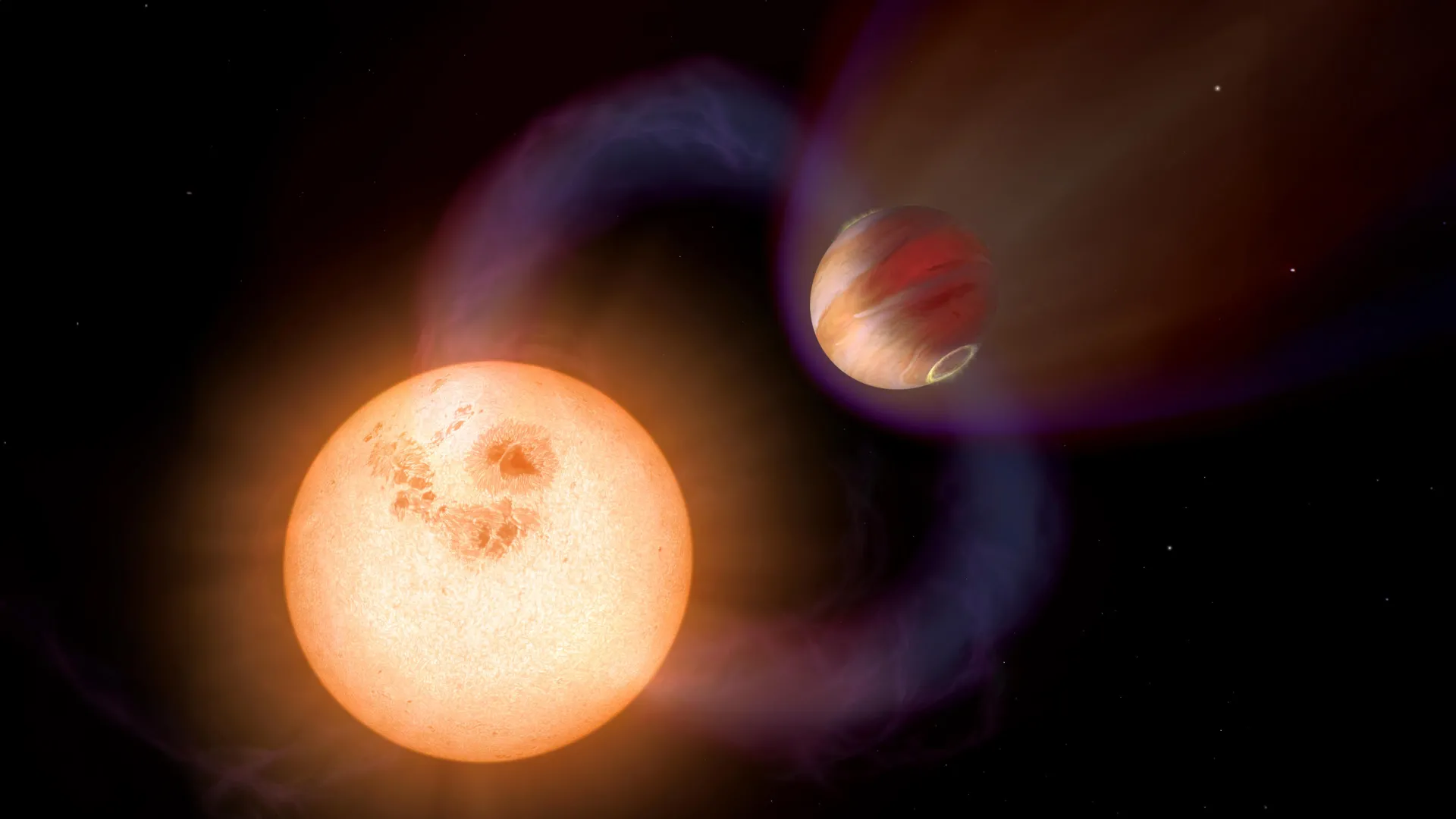
A powerful artificial intelligence tool called RAVEN has discovered more than 100 previously hidden planets buried within decades of space data from NASA's TESS mission, revealing rare and extreme worlds that had gone unnoticed by traditional analysis.
NASA's Transiting Exoplanet Survey Satellite (TESS) is an Explorer-class planet finder designed to discover thousands of exoplanets by surveying the entire sky for periodic dips in star brightness, known as transits. Unlike its predecessor Kepler, which focused on distant stars in a small patch of sky, TESS targets the brightest stars closest to Earth, making its discoveries ideal for detailed follow-up studies of planetary masses, densities, and atmospheric compositions by telescopes like the James Webb Space Telescope. Launched in 2018 and led by MIT, the mission operates from a unique, highly elliptical 13.7-day orbit, providing an unobstructed view that has already identified thousands of planet candidates ranging from small, rocky worlds to massive gas giants.
According to ScienceDaily, RAVE, "by analyzing millions of stars . . . has confirmed over 100 exoplanets, including 31 brand-new worlds, and identified thousands of more promising candidates. What makes this especially exciting is the discovery of rare and extreme planets, like those that whip around their stars in less than a day and those lurking in the mysterious 'Neptunian desert' where planets are thought to be scarce."
Unlike conventional methods, which rely heavily on manual verification and predefined detection rules, RAVEN can scan massive datasets far more efficiently and identify faint or unusual signals that humans might overlook. This has led to the identification of over 100 new exoplanet candidates, some of which fall into rare and extreme categories.
Some discovered planets are located in environments previously thought unlikely to support planetary formation, while others challenge existing theories about how solar systems evolve. These findings expand the diversity of known worlds beyond what scientists had previously imagined.
According to ScienceDaily, "RAVEN is an automated systems designed to address one of astronomy's biggest challenges, turning enormous volumes of space telescope data into reliable discoveries. It scans data from millions of stars to find the tiny drops in brightness caused by planets passing in front of them. The system then uses artificial intelligence trained on realistic simulations to filter out false signals such as binary stars or instrument noise, before statistically confirming the strongest candidates."
"Importantly, RAVEN also evaluates which types of planets are easier or harder to detect, helping researchers correct for hidden biases. This means it also speeds up the discovery of new worlds but also produces cleaner, more reliable datasets that can be used to answer larger questions about how common different kinds of planets are across the galaxy."
Pi Insight:
The universe may already be mapped—but not yet understood.
With AI, we are not just observing space—we are rediscovering it, uncovering hidden worlds that were always there, waiting to be seen.
REFERENCES: NASA, ScienceDaily,
Image Source: ScienceDaily