Browsing Category

Industry

Asus ZenBook Duo has officially moved dual full-size OLED laptop
Industry May 14, 2026

Asus ZenBook Duo has officially moved dual full-size OLED laptop

For decades, the laptop form factor was defined by a single hinge and a single display. In 2026, that blueprint has officially been retired. Asus has announced that its flagship ZenBook Duo line has moved exclusively to a dual full-size OLED configuration, signaling the end of the "experimental" phase for dual-screen computing. By replacing the physical keyboard deck with a second 14-inch Lumina OLED panel, Asus has successfully transformed the mobile workstation into a modular "command center" that adapts to the user’s environment in real-time. The Death of the 'ScreenPad Plus' The move to dual full-size displays marks a clean break from the "ScreenPad Plus" era of the early 2020s, which featured a cramped, half-height secondary screen. The 2026 ZenBook Duo utilizes two identical OLED panels with 120 Hz refresh rates, offering a combined $19.8$ inches of vertical workspace when opened in "Desktop Mode." This transition is powered by a new high-cycle "Titanium Link" hinge, which Asus claims can withstand 100,000 folds—effectively outlasting the typical five-year lifecycle of a professional laptop. Modularity: The Detachable Advantage Central to the 2026 design is the refined detachable Bluetooth keyboard. When placed on top of the lower screen, the device functions as a traditional 14-inch laptop. However, when the keyboard is removed, the device reveals its true potential. • Dual-Screen Mode: Stacked vertically for long-form coding or document editing. • Desktop Mode: Opened like a book, providing side-by-side 4:3 workspaces for research and content creation. Sharing Mode: The hinge allows a full 180-degree lay-flat position, with software that automatically flips the top display to face a person sitting across the table. AI-Driven Workspace Management To manage the massive increase in digital real estate, the ZenBook Duo utilizes an "Intelligent Window Manager" powered by the latest NPU-heavy silicon. The OS now recognizes "Focus Gestures"—for example, a five-finger tap on the lower screen instantly summons a virtual haptic keyboard, while a three-finger swipe sends an active window to the "Preview Pane" on the upper display. This AI-driven orchestration ensures that the transition between hardware modes is seamless, solving the "software friction" that plagued early multi-screen attempts. The Ergonomic Mandate: Reducing "Tab Fatigue" Productivity metrics for 2026 suggest that dual-screen users experience an increase in task efficiency compared to single-screen users. By eliminating "Tab Fatigue"—the mental load required to constantly switch between hidden windows—the ZenBook Duo has become the preferred choice for data analysts, video editors, and executive-level professionals. The device effectively brings the "multi-monitor office setup" into the coffee shop, the airplane tray table, and the remote workspace. Competition and the Foldable Threat While Asus currently leads the dual-panel market, the ZenBook Duo faces stiff competition from the burgeoning "Foldable OLED" sector. However, Asus has positioned the Duo as the "reliable" alternative. By using two separate glass-protected panels instead of a single folding plastic screen, the Duo maintains superior scratch resistance and a more affordable price point. In the 2026 landscape, the ZenBook Duo represents the "Structural Evolution" of the laptop—a device that acknowledges that in the age of AI and massive data streams, one screen is simply no longer enough. ZenBook Duo 2026 Specifications: • Display: Dual 14-inch Lumina OLED; 120 Hz. • Hinge: 180-degree "Titanium Link" with integrated cooling vents. • Input: Detachable full-size haptic keyboard + level pressure stylus. • Performance: Intel Core Ultra "Lunar Lake" / AMD Ryzen AI 400 Series. • Weight: 1.35 kg (excluding keyboard); 1.65 kg (total travel weight). Visit ASUS Pressroom to Read More Image Source: ASUS

Read Insight


DID YOU KNOW? Elon Musk Co-founded OpenAI with Sam Altman: The Rivalry That Built the AI Era
Industry Apr 28, 2026

DID YOU KNOW? Elon Musk Co-founded OpenAI with Sam Altman: The Rivalry That Built the AI Era

While they are now fierce competitors in the race for Artificial General Intelligence (AGI), many people are surprised to learn that Elon Musk and Sam Altman actually co-founded OpenAI together in 2015. What started as a collaborative "non-profit" mission to save humanity from the risks of unchecked AI has evolved into one of the most high-stakes corporate and legal dramas of the 2026 tech landscape. The $1 Billion Handshake In December 2015, Elon Musk, Sam Altman, Greg Brockman, and several others announced the formation of OpenAI with a staggering $1 billion in committed funding. At the time, the goal was explicitly altruistic: to build "safe" AI that would be open-source and available to everyone, specifically to act as a counterweight to the closed-source dominance of Google and DeepMind. Musk was the primary financial engine in the early days, contributing tens of millions of dollars and providing the organization with its initial "gravitas." Altman, then the president of the startup incubator Y Combinator, provided the strategic vision for scaling the organization's human capital. The Ideological Split The partnership began to fracture in 2018. Musk reportedly grew concerned that OpenAI was falling behind Google and proposed taking direct control of the entity to run it himself. When Altman and the other founders transitioned OpenAI to a "capped-profit" model to attract the massive computing capital needed for LLMs (Large Language Models), Musk officially resigned from the board. Musk’s departure was publicly framed as a conflict of interest with Tesla’s own AI development, but privately, it marked the beginning of a deep ideological rift. Musk began to publicly criticize the company for becoming a "closed-source, maximum-profit company effectively controlled by Microsoft." 2026: From Founders to Litigants By early 2026, the relationship between the co-founders had moved from the boardroom to the courtroom. Musk filed several high-profile lawsuits against OpenAI and Sam Altman, alleging a "betrayal" of the founding mission. Meanwhile, Altman has steered OpenAI to become a trillion-dollar ecosystem, while Musk launched xAI and its "Grok" model to directly challenge his former creation. The irony of the 2026 AI landscape is that the industry's two most powerful entities—OpenAI and xAI—trace their lineage back to the same 2015 mission statement. Key Facts You Might Have Missed: • The Name: Elon Musk is credited with coming up with the name "OpenAI" to emphasize the open-source nature he originally demanded. • The Talent: Musk was instrumental in recruiting top talent from Google and academia, often personally calling engineers to convince them to join the non-profit. • The Microsoft Deal: The multi-billion dollar partnership with Microsoft, which Musk heavily criticizes, only happened after he left the board. • Current Status: In 2026, Musk’s xAI and Altman’s OpenAI are competing for the same pool of specialized chips and engineering talent that they once sought to share. Image Source: The Economic Times | LogicGate

Read Insight
Death of the Password: Why UK Cyber Chiefs are Urging a Move to Passkeys
Industry Apr 26, 2026

Death of the Password: Why UK Cyber Chiefs are Urging a Move to Passkeys

The UK’s National Cyber Security Centre (NCSC) has officially issued a landmark directive advising citizens and businesses to begin "ditching" traditional passwords in favor of passkeys, a move designed to permanently neutralize the threat of phishing and credential theft. This shift marks the beginning of the end for the alphanumeric password, replacing it with a cryptographic "passkey" that leverages device-level biometrics—such as FaceID or fingerprint sensors—to authenticate users without requiring them to memorize or type a single character. What are Passkeys and How Do They Work? At their core, passkeys are a digital alternative to passwords based on the FIDO (Fast IDentity Online) standard. Unlike a password, which is a secret string of text stored on a company's server, a passkey consists of a "key pair": a public key stored by the website and a private key stored securely on your local device (phone, laptop, or security key). When you log in, the website sends a "challenge" to your device, which is signed by your private key only after you verify your identity via biometrics or a PIN. Because the private key never leaves your device, there is nothing for a hacker to intercept or steal. Why Passwords are No Longer Sufficient The primary driver behind this shift is the "structural fragility" of the traditional password system. In early 2026, over 80% of data breaches remain linked to compromised credentials, often obtained through increasingly sophisticated AI-driven phishing attacks. Passwords are vulnerable because they can be guessed, reused across multiple sites, or stolen from a company's database in a "bulk leak." Passkeys solve this by being "un-phishable"; since the website doesn't store your private key, even a total server breach at a major corporation would not give hackers access to your account. The Ease of Use Factor One of the most significant hurdles to cybersecurity has always been "friction"—the annoyance of managing hundreds of complex passwords or using clunky multi-factor authentication (MFA) apps. Passkeys eliminate this friction by integrating directly into the operating systems of modern devices. Whether using an iPhone, an Android device, or a Windows PC, the login process becomes as simple as unlocking your phone. Furthermore, passkeys are designed to be "synchronized" across a user's cloud ecosystem (such as iCloud Keychain or Google Password Manager), ensuring that if you lose your phone, your digital keys remain accessible on your new device. Addressing the Transition Period While the NCSC is pushing for a rapid transition, they acknowledge that we are currently in a "hybrid era." Most major platforms, including Google, Apple, Microsoft, and Amazon, already support passkeys, but many smaller websites and legacy systems still rely on traditional logins. Cyber chiefs recommend that users begin the transition by enabling passkeys on their most sensitive accounts—banking, email, and social media—while continuing to use a reputable password manager for the remaining legacy sites. The Future of Digital Identity The move to passkeys is seen as a foundational step toward a "Zero Trust" digital economy. As we move further into 2026, the goal is to reach a point where identity is verified by "possession and biometrics" rather than "memory." By removing the human element of "knowing" a secret, the UK government hopes to see a dramatic decline in identity theft and fraudulent transactions, effectively closing the door on the most common entry point for cybercriminals. Quick Summary: Password vs. Passkey • Password: Something you remember (vulnerable to social engineering and reuse). • Passkey: Something you have + Your biometrics (protected by hardware and un-phishable). • Mechanism: Public-key cryptography (Private key never leaves your device). • Status: Supported by all major tech platforms as of 2026. Image Source: TechRepublic | Britannica

Read Insight
The iPhone Fold: A Myth Or A Revolution?
Industry Apr 25, 2026

The iPhone Fold: A Myth Or A Revolution?

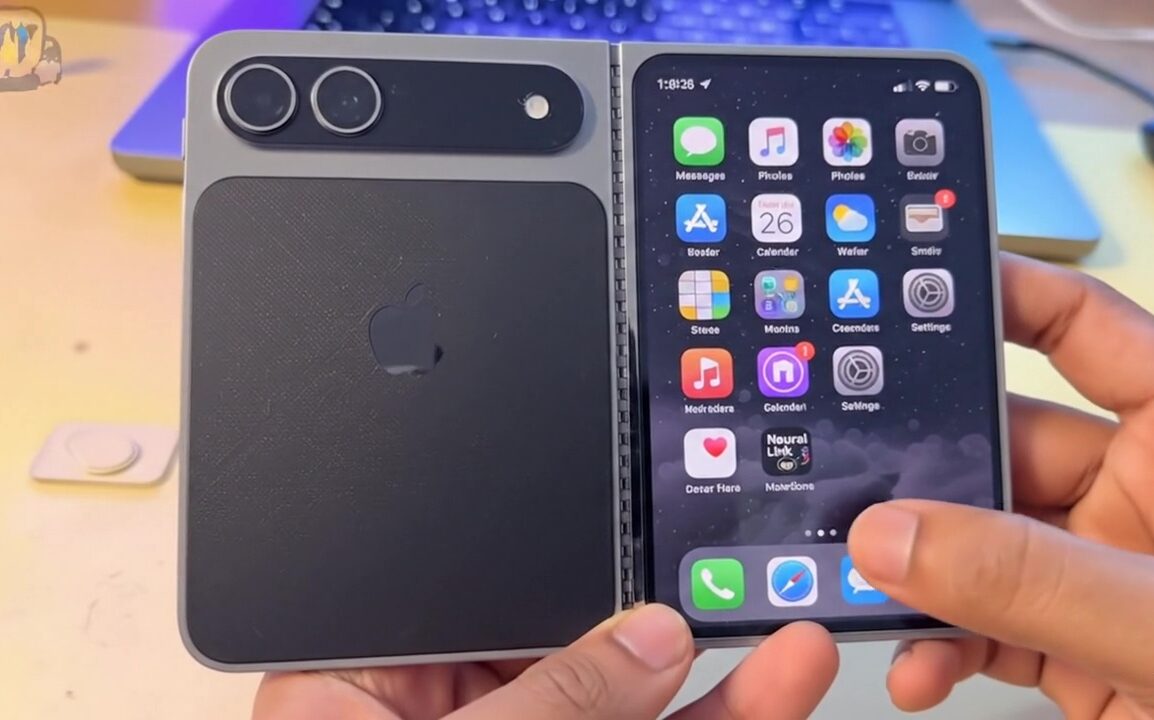
For nearly two decades, the iPhone has been defined by a single, unyielding law of design: the rigid glass slab. However, that foundation is now trembling under the weight of mounting industry pressure and a flurry of secretive supply chain activity. While Apple has yet to officially confirm an "iPhone Fold" or a titanium-clad "iPhone Ultra", the silence from Cupertino has become deafening. We are no longer asking if Apple can bend the laws of physics, but rather when they will choose to bend the most iconic silhouette in tech history. The Strategic Silence of a Tech Giant It is important to emphasize that, as of April 2026, Apple has maintained its trademark wall of silence regarding any departure from the classic glass-slab form factor. This lack of confirmation is standard for the Cupertino firm, which historically avoids being the first to market with new technologies, preferring to wait until a category has matured before attempting to "perfect" it. Analysts suggest that the rumored delay in an iPhone Fold is not a sign of stagnation, but rather a rigorous pursuit of a display that lacks the visible crease and mechanical fragility that have hampered early foldable entries from other manufacturers. A Logical Evolution for the iPhone Ecosystem The prospect of a foldable iPhone would not be surprising to industry veterans who have watched Apple slowly expand the "Pro" and "Ultra" branding across its other product lines. With the iPad and MacBook increasingly blurring the lines between mobile and desktop computing, a device that can transition from a standard pocket-sized phone to a tablet-sized canvas feels like a natural progression. Such a move would allow Apple to consolidate its ecosystem, offering a "one-device" solution for professionals who currently juggle both a phone and a smaller tablet for productivity tasks on the go. Revolutionizing the User Interface The true potential of a foldable iPhone lies less in the hardware and more in the software optimization. A folding device could revolutionize the iOS experience by introducing "continuity" features that allow apps to expand and reflow seamlessly as the device opens. Imagine a video editing suite that offers a simplified interface on the outer display but blossoms into a full-timeline view upon unfolding. If Apple can successfully translate its "Pro" software capabilities to a transformable screen, it could redefine the iPhone from a communication device into a mobile workstation that challenges the utility of the traditional laptop. Material Engineering and the Durability Hurdle One of the most significant considerations for a potential iPhone Fold is the "Apple Standard" for durability. The company has built a reputation on devices that last five to seven years, a metric that is difficult to achieve with current folding screen technology. Rumors suggest that Apple is working on a self-healing polymer layer that could mitigate surface scratches caused by the folding action. Furthermore, the engineering of a "zero-gap" hinge that prevents dust ingress while maintaining water resistance remains a primary obstacle. Apple’s eventual entry into this market will likely be defined by whether they can make a folding screen feel as permanent and rugged as the current ceramic shield glass. Market Positioning and the Ultra Premium Tier There is also the question of economic positioning. If an iPhone Fold or Ultra were to arrive, it would likely occupy a new "super-premium" price tier, potentially pushing the boundaries of what consumers are willing to pay for a mobile device. This creates a delicate balancing act for Apple. They must justify a significant price hike through undeniable utility and prestige without cannibalizing the sales of their existing iPad Mini or high-end iPhone Pro Max models. As the rumors continue to circulate, the tech world remains poised to see if Apple will once again wait for the perfect moment to bend the trajectory of the industry. Image Source: Phonegram

Read Insight
Meta to Start Tracking Worker's Screens and Clicks to Train AI Tool
Industry Apr 22, 2026

Meta to Start Tracking Worker's Screens and Clicks to Train AI Tool

Meta will start tracking the way employees work, including their keystrokes and mouse clicks, to train its artificial intelligence (AI) models. The company, which owns Instagram and Facebook, told workers on Tuesday that a new tool will run on Meta's computers and internal apps, logging their activity to be used as training data for AI technology. A Meta spokesman told the BBC: "If we're building agents to help people complete everyday tasks using computers, our models need real examples of how people actually use them." "The data is not used for any other purpose," he said, adding that the tool has "safeguards in place to protect sensitive content". But one Meta employee, who asked not to be identified, said having their smallest actions on a computer being used to train AI model as workers expect a slew of additional job cuts feels "very dystopian". "This company has become obsessed with AI," they told the BBC. Another person who recently left the company said the tracking tool is "just the latest way they're shoving AI down everyone's throat". Meta has already laid off around 2,000 employees this year in smaller rounds of cuts, but employees have been expecting deeper job losses in the coming months, as the BBC previously reported. Last month, the company enacted a partial hiring freeze which now appears to be more far-reaching. A website that Meta uses to advertise all of its jobs hosted about 800 listings in March. Now, it is advertising just seven jobs. Meta's spokesman declined to comment on the company's removal of job listings or plans for cuts. Meta's new tracking tool is called Model Capability Initiative or MCI, according to Reuters which first reported the move. The BBC has been told that an employee's activity on a Meta computer would have been accessible to the company before, however tracking and logging specifically for the purpose of training and improving AI tools is new. Mark Zuckerberg, Meta's co-founder and chief executive, recently pledged to ramp up spending on AI projects this year. and is attempting to position the firm at the forefront of the technology. Meta plans to spend roughly $140bn on AI in 2026, almost double the amount it invested in the technology a year ago. In 2025, it took over nearly half of Scale AI with a $14bn (£10.3bn) investment, and brought some executives of the data-labeling firm into Meta to help it build out its AI models and tools. Visit BBC to Read More Article Source: BBC Image Source: Fortune (fortune.come)

Read Insight
Apple Promotes Tim Cook to become Executive Chairman of Apple's Board, And John Ternus To Become The Next CEO
Industry Apr 22, 2026

Apple Promotes Tim Cook to become Executive Chairman of Apple's Board, And John Ternus To Become The Next CEO

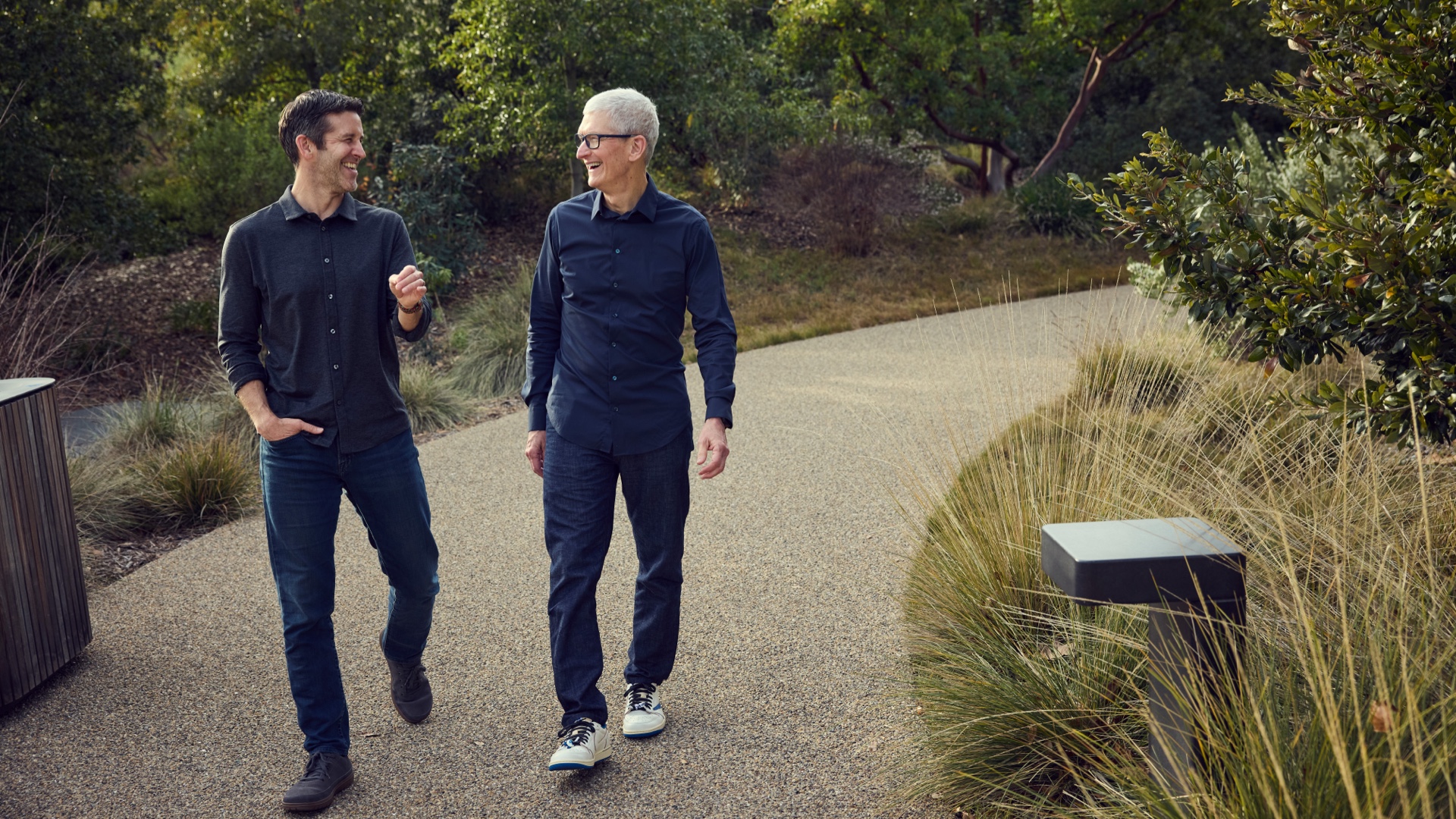
Apple Inc. has announced a major leadership transition as Tim Cook is set to become Executive Chairman of the company’s Board of Directors, while John Ternus, the Senior Vice President of Hardware Engineering, will take over as Apple’s next Chief Executive Officer. This transition is expected to take effect on September 1, 2026. "It has been the greatest privilege of my life to be the CEO of Apple and to have been trusted to lead such an extraordinary company. I love Apple with all of my being, and I am so grateful to have had the opportunity to work with a team of such ingenious, innovative, creative, and deeply caring people who have been unwavering in their dedication to enriching the lives of our customers and creating the best products and services in the world,” said Cook. Tim Cook joined Apple in 1998 and became CEO in 2011, and his tenure has been nothing short of transformative. Under his leadership, Apple expanded its product ecosystem and saw its market value rise from approximately $350 billion to nearly $4 trillion, while also quadrupling its annual revenue. Much of what users experience today across Apple’s products reflects the direction and decisions made during his time in office. John Ternus now steps into the CEO role with a strong engineering foundation, having led Apple’s hardware division through significant advancements. His work has strengthened the reliability and durability of Apple’s products, introducing technologies that have made devices more resilient and refined, further enhancing the user experience. With Tim Cook transitioning to a strategic role at the board level and John Ternus taking charge of day-to-day leadership, Apple appears poised to enter a new phase of growth. With both leaders continuing to shape the company’s direction, Apple is set to build on its legacy and push further toward an even stronger position in global technology. Visit Apple Newsroom to Read More Image Source: Apple Newsroom

Read Insight